Why fit a dash cam at all?
The honest case for a dash cam is simple: it turns a he-said, she-said dispute into a matter of fact. Most road incidents come down to whose account the insurers believe, and without evidence a not-at-fault claim too often ends in a 50/50 split that costs you your excess and a chunk of your no-claims bonus. A clear clip of the moment changes that. It shows who pulled out, who braked, who was on the wrong side of the road, and it does so without emotion or memory getting in the way. For a one-off cost of around eighty to two hundred pounds, that is genuinely cheap protection.
There is a second, less obvious benefit. UK roads have a growing problem with staged collisions, the so-called crash-for-cash scams where a driver brakes sharply in front of you, manufactures a rear-end shunt and then claims for whiplash and a write-off. A front camera helps, but these scams are precisely why a rear camera earns its keep: it captures the brake lights and the deliberate manoeuvre that a front-only camera cannot see. If you commute on busy A-roads or motorways, that cover alone can pay for the camera many times over.
Resolution: how sharp does a dash cam need to be?
Resolution is the headline figure on every dash cam box, and it matters, but not in the way the marketing implies. The job of a dash cam is to read number plates and identify vehicles, and that takes detail. Here is the practical hierarchy:
- 1080p (Full HD) is the sensible minimum and is fine for everyday cover. In good light it captures plates and details well, as on the Nextbase 322GW.
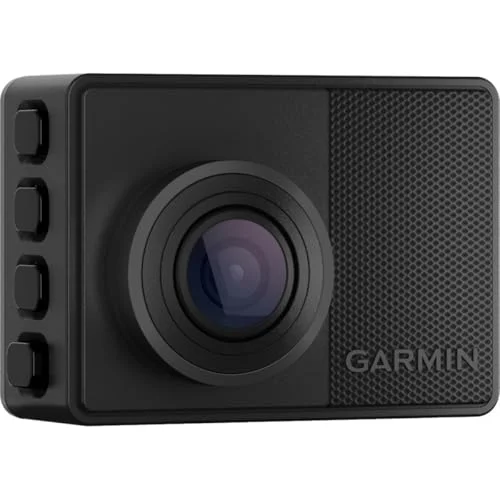
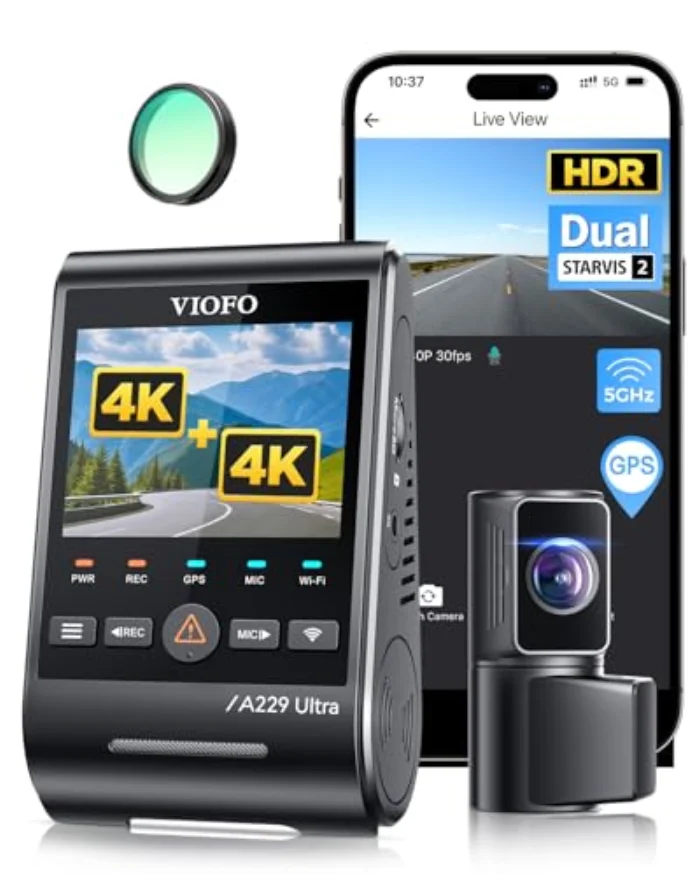
- 1440p (2K) is the sweet spot for sharpness against price, with noticeably more detail than 1080p. The Garmin 67W and the front lens of the Viofo A129 Plus Duo sit here.
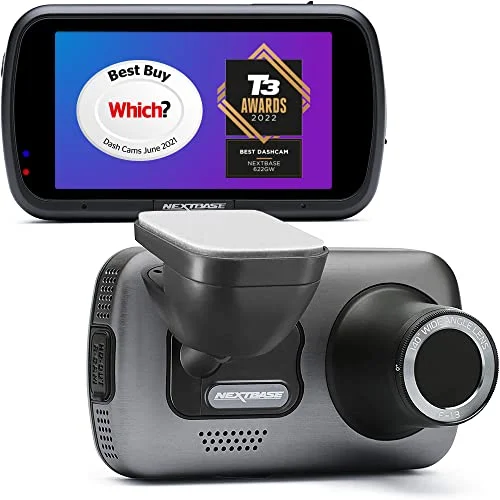
- 4K (Ultra HD) is worth it if you want to read a plate two or three cars ahead, or you do a lot of motorway driving. The Nextbase 622GW and Thinkware U3000 shoot 4K.
The catch is that a high resolution alone does not guarantee good footage. A cheap 4K camera with a poor sensor can look worse in the dark than a good 1440p camera, because the sensor and the lens decide how much usable light reaches the picture. That is why a STARVIS 2 sensor, as in the Thinkware U3000, can outperform a higher-resolution rival after dark. Read the resolution figure, but weigh it against the sensor and the night-vision results in our reviews. Our full buying guide walks through the rest of the spec sheet.
Night vision: where the cheap cameras fall down
Plenty of incidents happen in the dark, in the rain, or under poor street lighting, and that is exactly where the gap between a good camera and a cheap one opens up. In daylight almost any modern dash cam produces usable footage; at night, the differences are stark. A weak sensor turns oncoming headlights into a glare that washes out the plate you most need to read, and dim side roads become a grainy smear. A strong low-light sensor, by contrast, keeps plates legible and detail intact when it counts most.
If you do much night or winter driving, treat night-vision performance as more important than the headline resolution. The Thinkware U3000 is the clear leader here thanks to its STARVIS 2 sensor, while the Nextbase 622GW and Garmin 67W both hold up well. The budget cameras remain perfectly usable after dark, but you should size your expectations to the price.
Front only, or front and rear?
A single front camera covers the majority of incidents, and for many drivers it is enough. But a rear camera adds real protection in three situations: tailgaters who run into the back of you, low-speed shunts when you are stationary at a junction or in a queue, and the crash-for-cash scams described above. If you drive in heavy traffic, park on the street, or simply want the fullest cover, a front-and-rear kit such as the Viofo A129 Plus Duo is worth the extra money and the slightly longer fitting time. We weigh up the decision in detail in our guide to whether you need a front and rear dash cam.
Parking mode: protection when you are not there
Parking mode keeps the camera watching while the car is parked and the engine is off, capturing the moment if someone reverses into you in a car park or vandalises the car overnight. It is a genuinely useful feature, but there is a catch worth understanding before you buy: it almost always needs a hardwire kit to power the camera from the car's fuse box, with a voltage cut-off that stops it draining the battery flat. Smarter systems, such as the radar parking mode on the Thinkware U3000 or the buffered mode on the Viofo, wake only when they detect movement or an impact, which keeps the battery drain low. We explain the options, and what you actually need, in our guide to parking mode.
How we chose these six
We deliberately picked cameras that cover the full range of real UK needs rather than six near-identical 1080p boxes. There is a flagship 4K all-rounder, a discreet best-value camera, a front-and-rear specialist, a true budget pick, a low-light champion and a compact second-car option. Every model here is from a brand that is genuinely available and supported in the UK, and each one earns its place for a specific buyer. If you start by deciding your priority, whether that is the sharpest footage, the lowest price, rear cover or night driving, you will find your camera on this list. Our fitting guide then covers getting it on the windscreen and the cable out of sight.