Start with how you drive
The best dash cam is the one that fits your driving, not the one with the longest spec sheet. Before you compare cameras, answer three questions. Do you do a lot of night or motorway driving, where image quality matters most? Do you park on the street or in car parks where the car is at risk while you are away? And do you want cover behind you as well as in front? Your answers point you to the right features, and stop you overpaying for capability you will never use. With that in mind, here is what each part of the spec sheet actually means.
Resolution: 1080p, 1440p or 4K?
Resolution is the headline figure, and it does matter, because a dash cam's main job is to read number plates and identify vehicles, which takes detail. But it is not the only thing that matters. The practical hierarchy is:
- 1080p (Full HD) is the sensible minimum. It captures plates and details well in good light, at the close distances where most incidents happen. Fine for everyday cover.
- 1440p (2K) is the sweet spot for sharpness against price, with clearly more detail than 1080p without the cost of 4K.
- 4K (Ultra HD) is worth it if you want to read a plate two or three cars ahead, or you do a lot of fast motorway driving.
The crucial caveat is that resolution alone does not guarantee good footage. A cheap 4K camera with a weak sensor can look worse in the dark than a good 1440p one. So treat resolution as one factor among several, not the deciding number.
The sensor and night vision
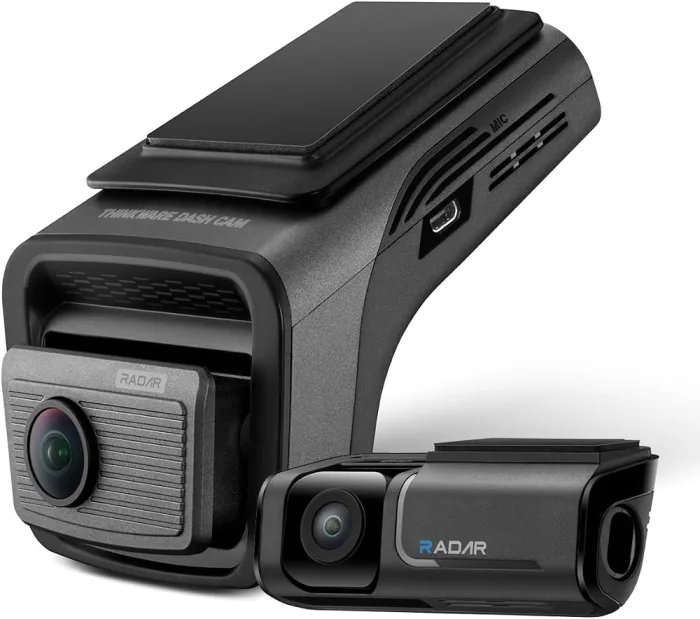
If you do much driving after dark, the sensor matters more than the resolution. The sensor decides how much usable light reaches the picture, and a strong low-light sensor keeps number plates legible against oncoming headlights, in tunnels and under poor street lighting, exactly where a weak one turns to a glaring smear. Look for Sony STARVIS or the newer STARVIS 2 sensors, which are designed for low light. A camera built around one of these, such as the Thinkware U3000, will comfortably outperform a higher-resolution camera with a cheaper sensor once the sun goes down. For night and winter drivers, this is the single most important spec.
Field of view
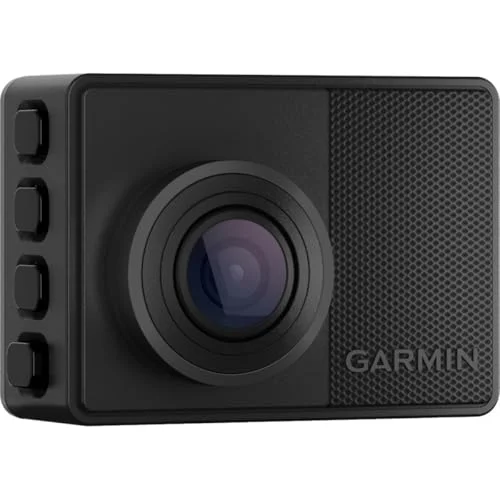
Field of view, measured in degrees, is how wide a scene the camera captures. Most cameras sit around 140°, which covers the road ahead and a little to each side. A wider lens, up to 180° on the Garmin 67W, catches more of what happens at the edges, such as vehicles cutting in from the side or incidents at junctions. Wider is generally better for evidence, with the small trade-off of a little distortion at the extreme edges. If you drive a lot in town, where side roads and junctions are where the trouble starts, a wide lens earns its keep.
Front only, or front and rear?
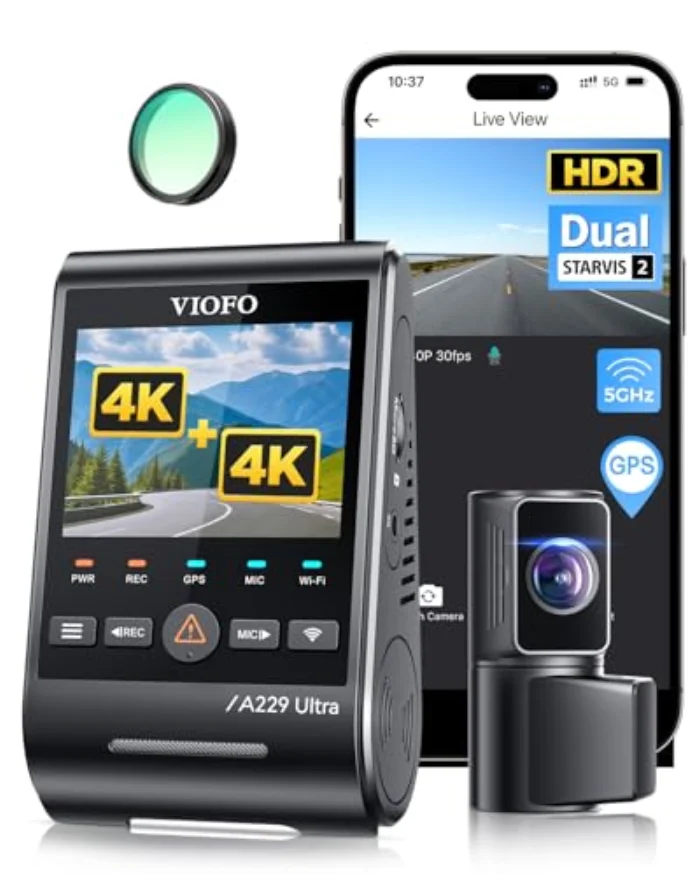
A front camera covers most incidents, but a rear camera protects you against tailgaters, rear-end shunts and crash-for-cash scams where someone brakes hard in front of you. If you sit in heavy traffic or park on the street, the extra cover is usually worth it. You can buy a dedicated front-and-rear kit such as the Viofo A129 Plus Duo, which is tidier and better value, or add a rear module later to a camera designed for it. We weigh this up in full in our guide to whether you need a front and rear dash cam.
Parking mode and hardwiring
Parking mode keeps the camera watching when the car is parked and the engine is off, capturing knocks, vandalism or hit-and-runs while you are away. The catch is that it almost always needs a hardwire kit, which powers the camera from the fuse box with a voltage cut-off so it does not flatten the battery. Smarter systems, such as radar or buffered parking modes, wake only when needed to keep the drain low. If parking protection matters to you, factor in the cost of the hardwire kit and a possible professional fit. We explain it all in our guide to parking mode.
GPS, memory cards and the practical extras
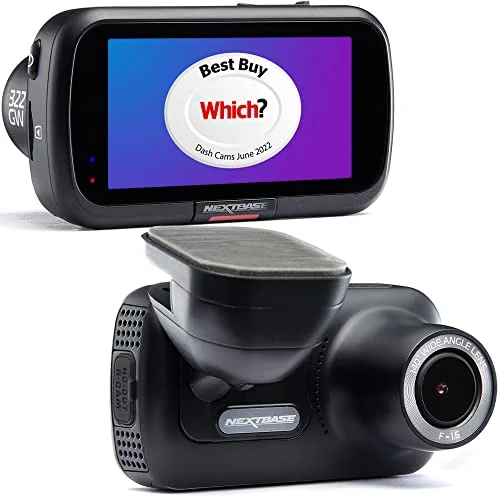
A few smaller features are worth having. GPS stamps your footage with speed and location, which strengthens an insurance claim. A high-endurance microSD card is essential: a 64GB or 128GB card rated for dash cams will withstand the constant looping that wears out a standard card. Higher resolutions fill cards faster, so a 4K camera benefits from 128GB or more. Useful safety extras such as Emergency SOS and what3words, found on Nextbase cameras, can alert the emergency services with your location if you are in a serious crash. None of these should be the deciding factor on their own, but together they separate a good camera from a merely adequate one.